


June 15, 2026
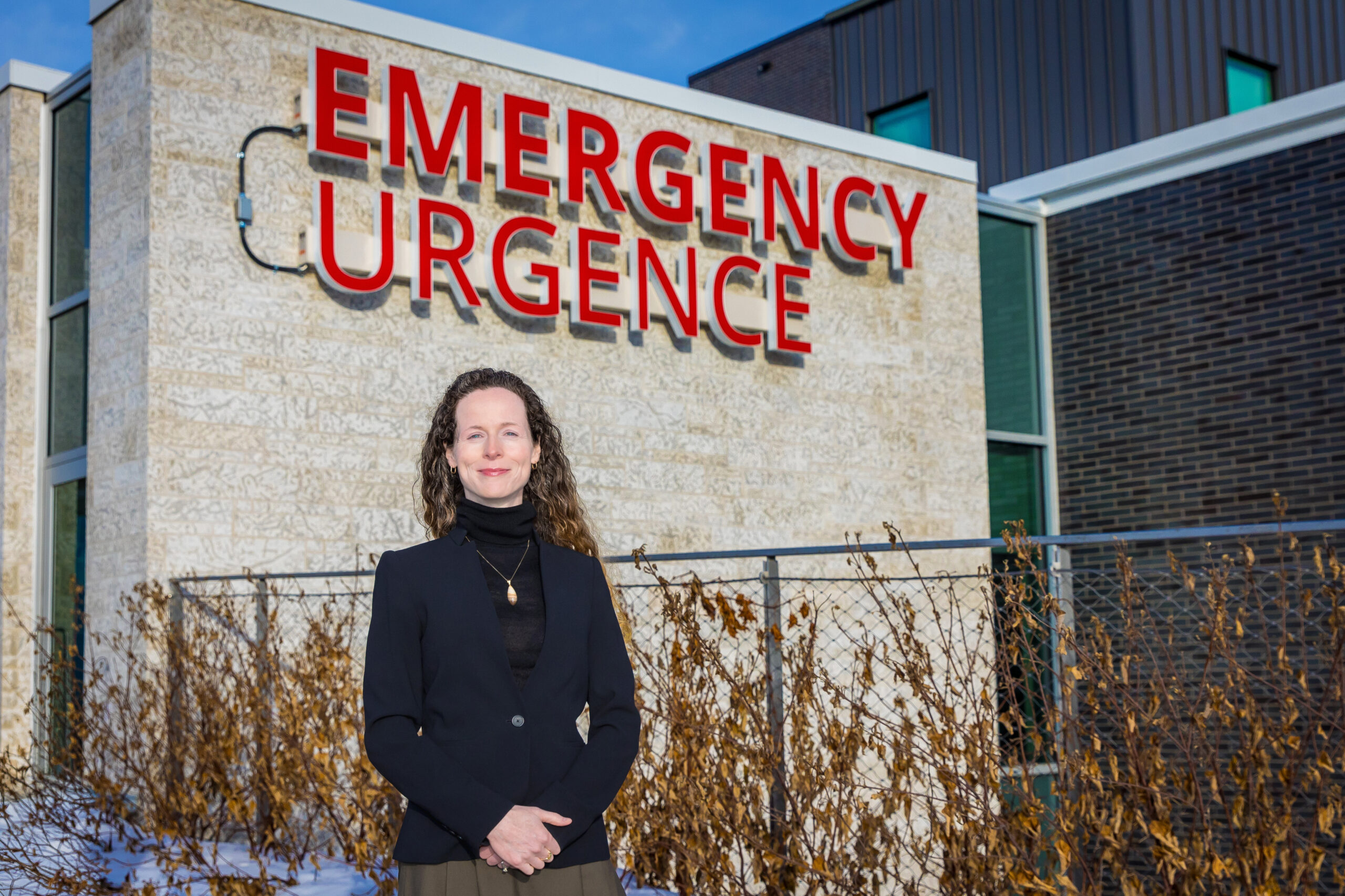
One of the first things Dr. Zoë Piggott noticed was the quiet.
It was October 2025 and the first phase of St. Boniface Hospital’s newly redeveloped and expanded Emergency Department (ED) had just opened to the public after three years of construction. The Foundation’s generous donor community had contributed more than $10 million in gifts to the project.
Now, patients were being treated in a spacious new environment that promotes more private and dignified care. And Dr. Piggott, Medical Site Director of the ED for a little over a year, could finally hear herself think.
“One of the first comments one of my colleagues made to me, at the end of his first shift or two was, ‘Wow, I have energy to go home now and focus on other things. I can play a game with my children and think about what to make for supper – I just have more cognitive room.’ He realized it was the lack of background noise,’” she remembered, sitting in her office in Emergency.
Built in 1955, St. Boniface’s old Emergency Department space had served an ever-growing number of Manitobans with minimal updates for almost seven decades. As patient loads grew and became more complex, so did the noise level in the busy department. Patients in distress, separated by curtains. Calling out for nurses. Hard of hearing. Cardiac monitors beeping and alarming.
“The background noise level was extraordinary. We didn’t realize how much energy we were expending just tuning out the din so we could focus on the important things,” said Dr. Piggott, who has been in emergency care at St. B for more than 13 years. (The ED is staffed by about 40 physicians and hundreds of nurses, health-care aides, technicians, security officers, cleaners, and many others working in shifts.)
“We didn’t realize in the old ED how much noise was affecting patient experience and staff experience as well. And it was just a function of the physical building.”
“Now we occupy three times as much space as we did. So, patients are just more spread out,” she continued. “All the treatment spaces have doors on them in the high acuity area that can be closed all the way, which really helps with noise. And even in our ambulatory care areas, there are sound-dampening barriers and solid half walls between patient spaces that really help with that.”
 Resuscitation spaces expanded, added
The heart of any emergency department is the central resuscitation area where staff save lives. Dr. Piggott says St. B’s was “woefully inadequate” in the old ED.
“We were working in rooms that were physically too small sometimes to fit all the personnel and equipment that we needed without a lot of shuffling around. And we didn’t have enough resuscitation spaces,” she said.
After the ED redevelopment and expansion, St. B went from two resuscitation spaces – three if they got creative – to four always being open now, with large sliding doors that can accommodate all manner of equipment. Dr. Piggott notes that two more resuscitation spaces are being built to open in October 2026.
“We really have increased our capacity to handle critically ill patients in a pinch, like a pandemic situation or a mass casualty incident. I hope that never happens, but if it does, we can fit two patients in each one of our new spaces. Then the capacity increases up to ten or 12 patients. So, it feels good to have that up our sleeve,” she said.
Underground garage adds to patient comfort
Until the redeveloped and expanded ED opened, ambulances from across the city and province pulled up and parked in spaces outside the Emergency doors, no matter the inclement weather
To make matters worse, the ambulance parking lot was on a steep angle. “I remember seeing the physical struggles of the paramedics who were trying to prevent stretchers with patients on them from sliding down the icy slope and into traffic,” remembered Dr. Piggott. “There were physical risks involved for everybody in that kind of reality.”
“Now we have a covered, heated, ventilated, climate-controlled ambulance garage underground that can fit 14 emergency vehicles,” she said. “And there’s a direct entry portal which opens onto two large high-speed elevators that take you right up to the center of the ED. They open right outside the resuscitation area. It cuts down on the risk and the discomfort and the time it takes to offload people and get them to where they need to go. So that is a major improvement.”
Patient distress in the ED is unavoidable, says Dr. Piggott. “People are frightened when they come here, they’re in pain, it’s the worst day of their life a lot of the time. That reality you can’t change. But when you leave people in a not private, extremely loud place that doesn’t even allow for basic human dignity like private toileting, adequate facilities, or enough room in the waiting room that you can bring a support person with you – that kind of distress and lack of dignity compounds the suffering that’s happening.”
“No one should have to go through that when it’s avoidable by improving the infrastructure. And so, we can’t change what has happened to people that led them to come to St. B, but we can offer them a more dignified, less distressing experience because of these improvements. That is worth it. That is what we’re here for, right?”