



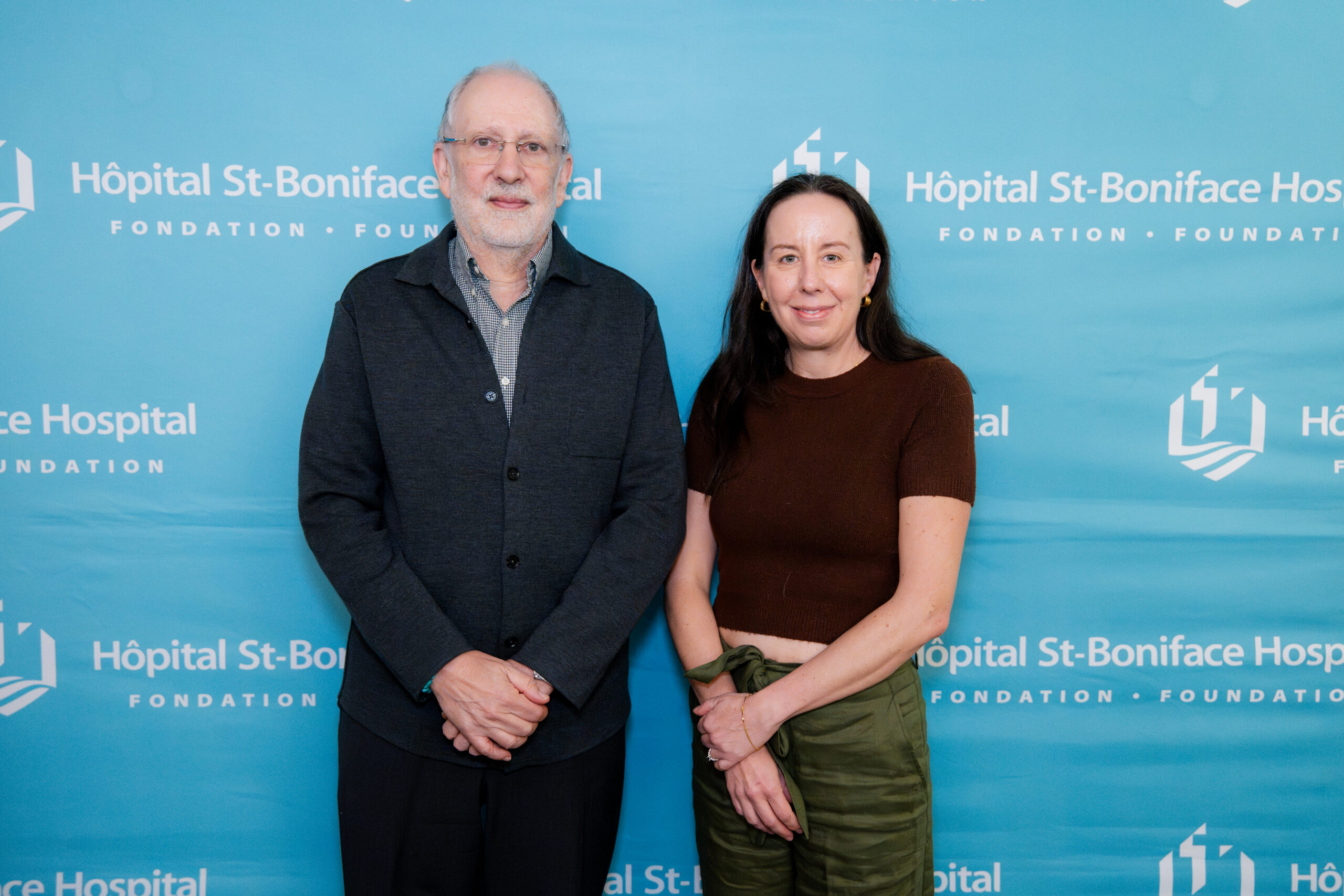
Expanding faster, more efficient heart attack treatment
May 7, 2026
In a cardiac emergency, the first few moments inside an emergency department shape everything that follows.
A test done too late, or a bed used inefficiently – such as using intensive care beds for low‑risk patients – can mean the difference between a full recovery and lasting heart damage.
For Dr. John Ducas, improving those moments is the focus of his latest work.
Dr. Ducas, cardiologist at St. Boniface Hospital, is one of two recipients this year of the Ronald Duhamel Innovation Fund Award. Named in honour of the late Senator and Member of Parliament for St. Boniface, the annual Award, given in April, provides funding to recognize and reward innovation make in patient care and medical research.
“At the end of the day, it’s about getting patients the right care, at the right time,” he said.
Dr. Ducas has spent more than four decades advancing cardiac care in Manitoba. As co-founder in 2014 of the Manitoba Acute Coronary Syndrome (ACS) Network, he helped standardize heart attack treatment across urban and rural communities in 2016 and 2017.
With over 100 peer‑reviewed publications, Dr. Ducas’s research has helped improve care efficiency by making better use of existing resources. His work identifies where processes can be improved, so patients receive the best possible care without needing additional staff or infrastructure.
Smarter use of critical care services
Dr. Ducas is currently studying what happens immediately after a heart attack has been treated. Traditionally, patients were routinely admitted to intensive cardiac care. Dr. Ducas and his team questioned whether that was always necessary.
Using the Zwolle Risk Score (a checklist doctors use to decide if a heart attack patient can go home early) they identified low-risk patients who can safely recover in a regular cardiology ward.
After implementing this in 2018, at St. Boniface Hospital, intensive care admissions dropped by nearly half, freeing up critical capacity for patients who need it most.
“We’re using the same resources, but in a smarter, more efficient way,” he said.
With the Duhamel Award funding, Dr. Ducas says he and his team will analyze several years of data to confirm the approach remains safe and to identify opportunities to refine it further.
Cutting time to first test
A second project targets an earlier point in care – when a patient first arrives at an emergency department with heart attack symptoms.
An electrocardiogram (ECG) is the first test patients receive. Guidelines from the Canadian Cardiovascular Society recommend it be completed within 10 minutes of the patient’s arrival. But when Dr. Ducas reviewed the average wait times at Winnipeg hospitals, he found that most patients were waiting longer.
“A 15-minute delay in reopening an artery can increase death rates by two to three percent,” said Dr. Ducas. “If we can shorten the wait time for receiving an ECG, we can reduce long-term heart damage.”
Working with Winnipeg emergency departments, his team introduced simple changes, including training registration staff to immediately prioritize chest pain and call for an ECG before completing intake.
At one site, median wait times dropped from 25 to 8 minutes in one year without adding staff or increasing costs.
“These aren’t just statistics,” he said. “These are people going home with less damage to their hearts.”
With support from the Duhamel Innovation Fund Award, Dr. Ducas will expand the Ten-Minute Tracing initiative to additional sites across Manitoba, including Concordia Hospital, Seven Oaks General Hospital, and Selkirk Regional Health Centre.
“Support from Foundation donors allows us to take ideas and turn them into real improvements,” he said. “It helps us measure what we’re doing, refine it, and expand it so more patients benefit.”
Thanks to support from donors like you, these changes are helping ensure patients across Manitoba receive faster, more effective care when it matters most.