
November 16, 2026
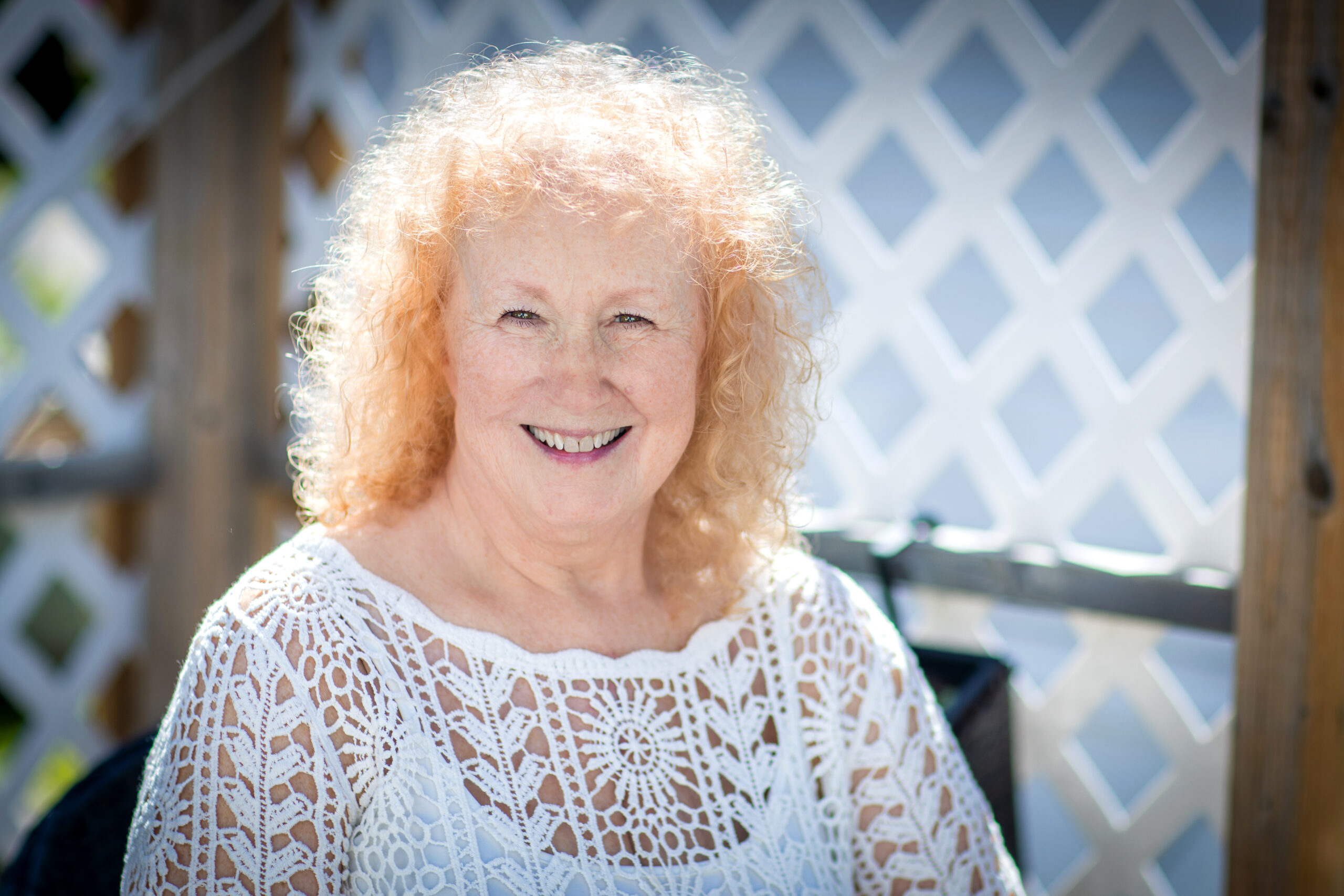
Belinda MacKinnon might not be alive today if her neighbourhood pharmacist had not scared her enough first.
In April 2026, MacKinnon, 67, had been experiencing for a week what she called “attacks” of an uncomfortable pressure sensation, rising from her chest to her throat. Proud of her busy and active lifestyle – she got tens of thousands of steps in per day on vacation in Mexico and the US only a few months before, in January – a serious heart problem had never crossed her mind.
So, feeling the same pressure again while out on a walk that spring day, the retired employee with Manitoba’s Department of Finance figured she needed an antacid for heartburn relief. She stopped in at a Shoppers Drug Mart near her St. Vital home.
“I hadn't bought an antacid in, gosh, I don't know how many years,” explained MacKinnon. “So, luckily, I asked the pharmacist on duty which was the best one to buy for this feeling of pressure – not indigestion or heartburn, though. Just pressure.”
“After hearing me out, the pharmacist looked at me and said, ‘Ma’am, I think you need to go see a doctor, right now.’ She didn’t think an antacid would be any help,” MacKinnon continued. “She was very stern; she suddenly became like a mother bear, urging me to seek medical help. And she scared me enough to take notice.”
Doubts still lingered
MacKinnon visited the Dakota Medical Centre Walk-In Clinic and a Dynacare Lab, both also nearby in St. Vital. The physician told her they would call if they found anything worrisome in her test results or blood work. “I thought, ‘I will never hear from you again,’” said MacKinnon.
Her phone rang the next morning. “At 11:33 am; I remember the time exactly,” she said. It was the Dakota Medical Centre: MacKinnon’s blood work showed elevated levels of troponin, a protein that signals heart muscle damage. “They told me my troponin was at 57. A normal reading is 14 or less.”
 She got off the phone and started walking down the hall towards her husband, Barrie. Her situation began to sink in. “I started feeling quite emotional. I told him, ‘That was the doctor's office. They want me to go to St. Boniface Hospital’s Emergency Department, immediately.’”
The couple cancelled plans to meet friends for lunch and rushed to St. Boniface Hospital.
Like many other women faced with discomfort, or symptoms that weren’t exactly clear, MacKinnon still had her doubts. “I would like to think that if I was having a heart attack, experiencing heart disease, or anything else along those lines, that I am self-aware enough to accept that,” she explained.
It’s not that she wasn’t scared, but she felt that she would know. After all, her father, Ivor Thomas, had a heart attack before he was 55 and quadruple bypass surgery, also at St. Boniface Hospital.
“I had no pain in my chest. I had no pain in my arm; not in my shoulders, not in my back, just feeling pressure in my throat. That's where my doubt came in. I didn't feel like I was presenting as someone who was having a heart attack or with a heart condition.”
Everything changed for MacKinnon soon after she had an electrocardiogram (ECG) and more blood work done. An Emergency Department physician came and sat down beside her. She remembers he looked tired.
“He put his hand very gently on my knee and said, ‘Belinda, you are a walking heart attack waiting to happen.’ I was taken aback at that point. He said, ‘We are going to admit you.’”
“You are a walking heart attack waiting to happen.”
Memories of her father came rushing back to her. “I got scared. Now I understood that this had become serious,” she said. “When the doctor said that to me, and the kindness he was showing me, it hit me very quickly and made me aware that this was not what I thought might be going on in my little mind. This was absolutely a heart issue, and I needed to cooperate and do everything everyone here was telling me to.”
Bypass surgery needed
The next day at the Hospital, MacKinnon underwent an angioplasty test. “I failed that miserably,” she remembered. “They basically didn’t check all my arteries because the first one was 90 per cent blocked. The next one was 80 per cent blocked. They had seen enough.”
To save her life, MacKinnon needed bypass surgery after the weekend.
Her cardiologist visited her in her hospital room around dinner time that Friday night. He asked if she was in any pain; she was not. “He said, ‘Because, if you need to, we could probably get you in sooner this weekend.’”
“And I said, ‘No, I'm not that uncomfortable.’ I knew that meant that there could be somebody else who was much sicker than I was. I could have been bumped to later that week, but I was lucky and I was able to have my surgery as scheduled on the Monday afternoon.”
Memories of her father
MacKinnon went into the surgery with an open mind but cautioned her family. “I had been in the Intensive Care Unit way back in the day, after my dad had his quadruple bypass, and seeing him there was terrifying. So, I asked my family not to come; to see me intubated and that type of thing,” she remembered. “You can’t unsee it.”
She had been told to expect triple bypass surgery. “But when they got in there, they decided it had to be quadruple bypass surgery,” she said. “So, that was what I had.”
MacKinnon says she was blessed to have the experience she did at St. B. She spent a total of 16 days in the Hospital, after her discharge was delayed by an arrhythmia, or irregular heartbeat.
Despite her warning before the surgery, some of her family members – which include Barrie, son Bradley, and daughters Nikkol and Karly – decided to spend time with MacKinnon in her hospital room, while others held back until later. “Either way, I never felt alone,” she said.
“Having my family with me was important,” she said. “Truth be told, I’m not sure I could have made it through some of those long nights without their love. They were my incredible support system.”
Her husband, Barrie, says the care she received while recovering from the surgery was excellent. “Even though I wanted Belinda to come home, I…I didn’t, you know? When she had the arrhythmia, what could I have done for her at home? So, I was grateful they kept her for a few more days to take care of it,” he said. “Her nurses were always there when called upon.”
Agreeing, Belinda calls her care team superheroes. “I don’t have another word for them,” she said. “The amazing care and kindness. I truly can’t say enough good things about the nursing staff. Even when they sometimes had trouble with the outdated equipment they were working with, they took it with such grace,” she added.