



October 7, 2026
When a critically ill patient arrives in the Intensive Care Unit (ICU), nurses must make quick decisions under pressure.
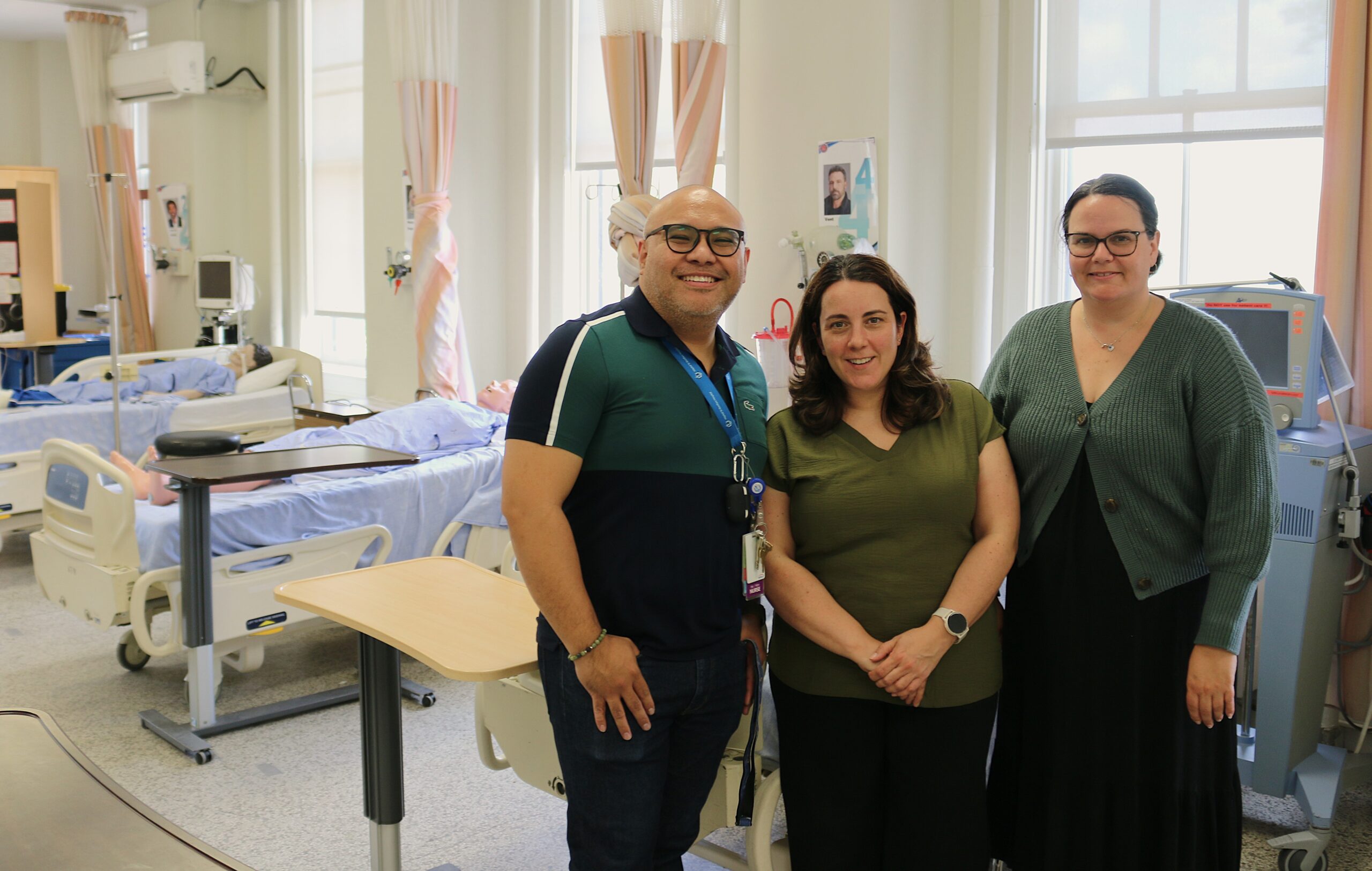
Long before they care for their first ICU patient, they can upgrade those skills in St. Boniface Hospital’s Critical Care Nursing Simulation Lab.
Thanks to the generosity of the Jim Orzechowski Memorial Endowment Fund and the Demion Orzechowski Endowment Fund, the ICU simulation lab has been renovated to better prepare nurses for the realities of critical care.
The lab is primarily used to train nurses entering critical care through St. Boniface Hospital’s Critical Care Nursing Orientation Program.
Three times a year, new cohorts spend six weeks combining classroom learning with hands-on simulation before continuing their clinical training.
The space also hosts Advanced Cardiac Life Support (ACLS) courses and ongoing education for experienced critical care nurses.
“Before the renovation, we still had old-fashioned crank beds, old cabinetry, and equipment that no longer reflected what nurses were seeing in practice or in nursing school,” said Jenn Rodriguez-Turenne, Clinical Nurse Educator.
Today, the Lab features new hospital beds, custom cabinetry, a digital interactive whiteboard, and upgraded simulation technology. At the center is a high-fidelity mannequin that simulates a pulse, changing vital signs, breath sounds, and realistic vocal responses.
Educators can adjust the mannequin’s condition in real time, allowing trainees to experience scenarios that closely mirror real ICU care.
“The scenarios are much closer to reality,” said Laura Ross, Clinical Nurse Educator. “Instead of talking through a situation, nurses are using their assessment skills, clinical judgment and hands-on techniques in an environment that feels much more like caring for a real patient.”
The donor-funded medical technology also gives educators new teaching tools, allowing them to display ventilator settings, cardiac rhythms, and other clinical information.
“It creates a psychologically safe environment where nurses can learn, be vulnerable, and build confidence before they’re at the bedside,” Ross said.
By practicing realistic scenarios before entering the ICU, nurses are better prepared to recognize changes in a patient’s condition, respond quickly, and work effectively as part of the care team.
Keeping the Simulation Lab current is also essential as nursing education continues to evolve.
“It challenges us as educators to keep learning ourselves and stay current with technology,” said Elson Alvarez, Clinical Nurse Educator. “We need to match the education nurses are receiving before they arrive here.”
“We wouldn’t have been able to update the Lab the way we did without donor support,” Rodriguez-Turenne said. “Most funding naturally goes toward front-line patient care. Support for education spaces like this makes a tremendous difference.”
Every improvement helps prepare nurses for the realities of critical care.